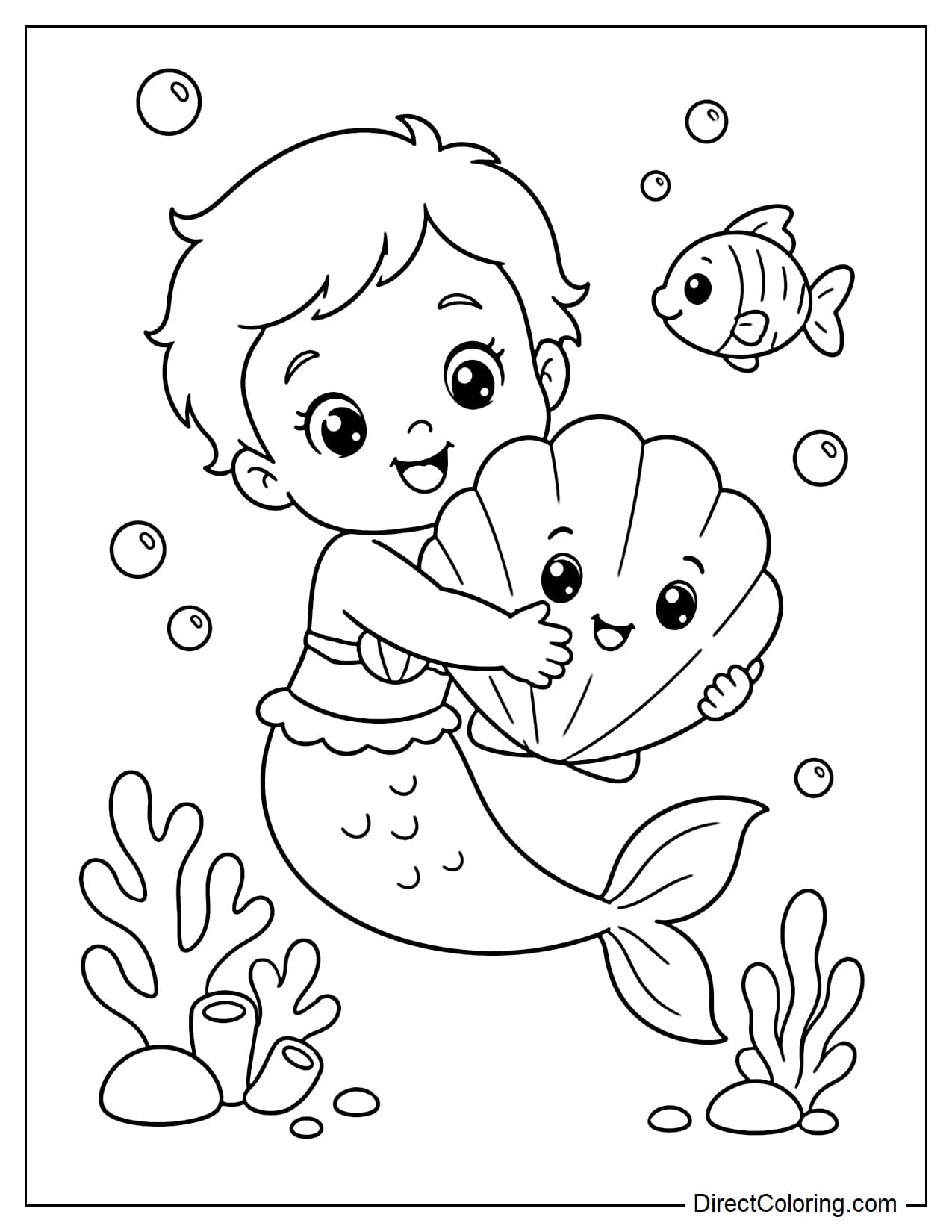
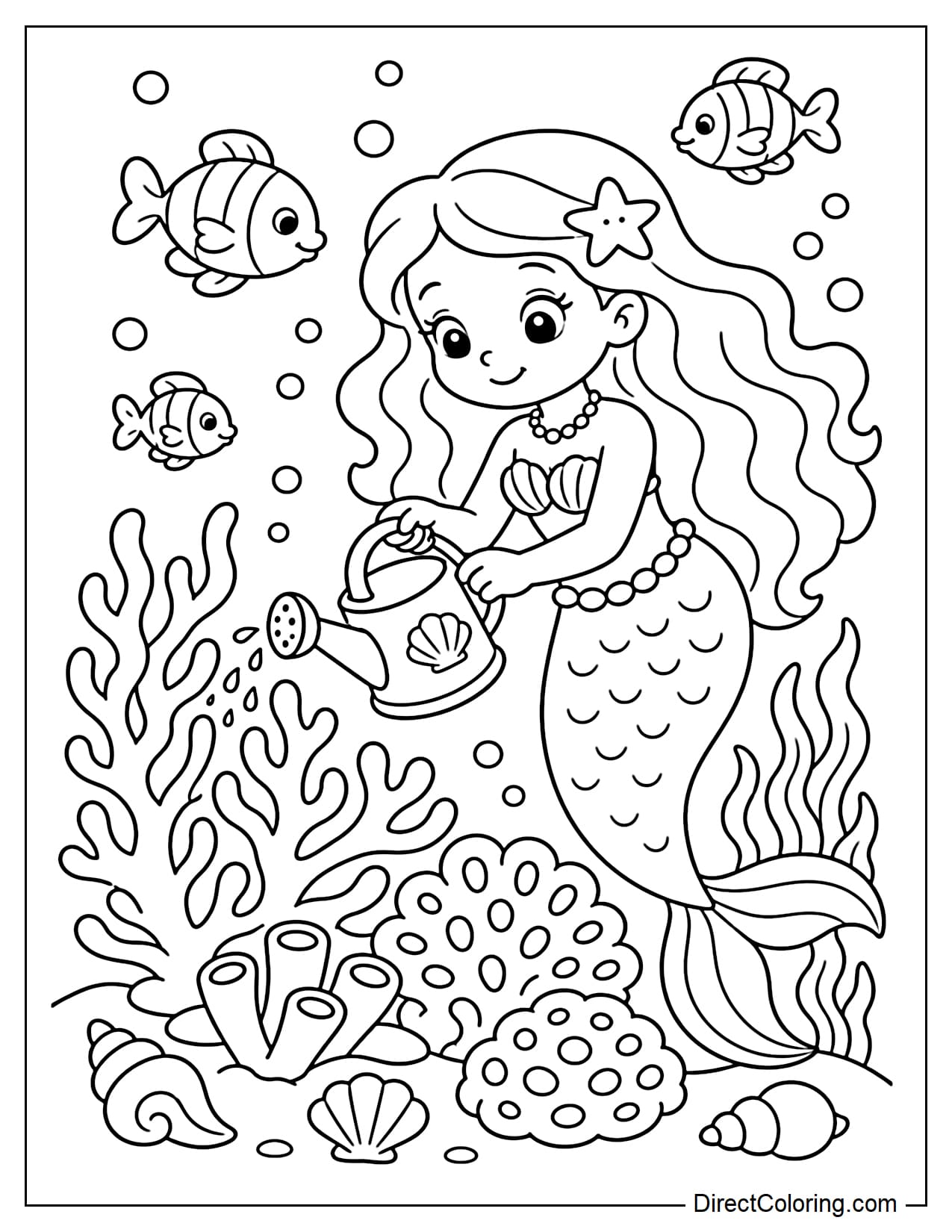
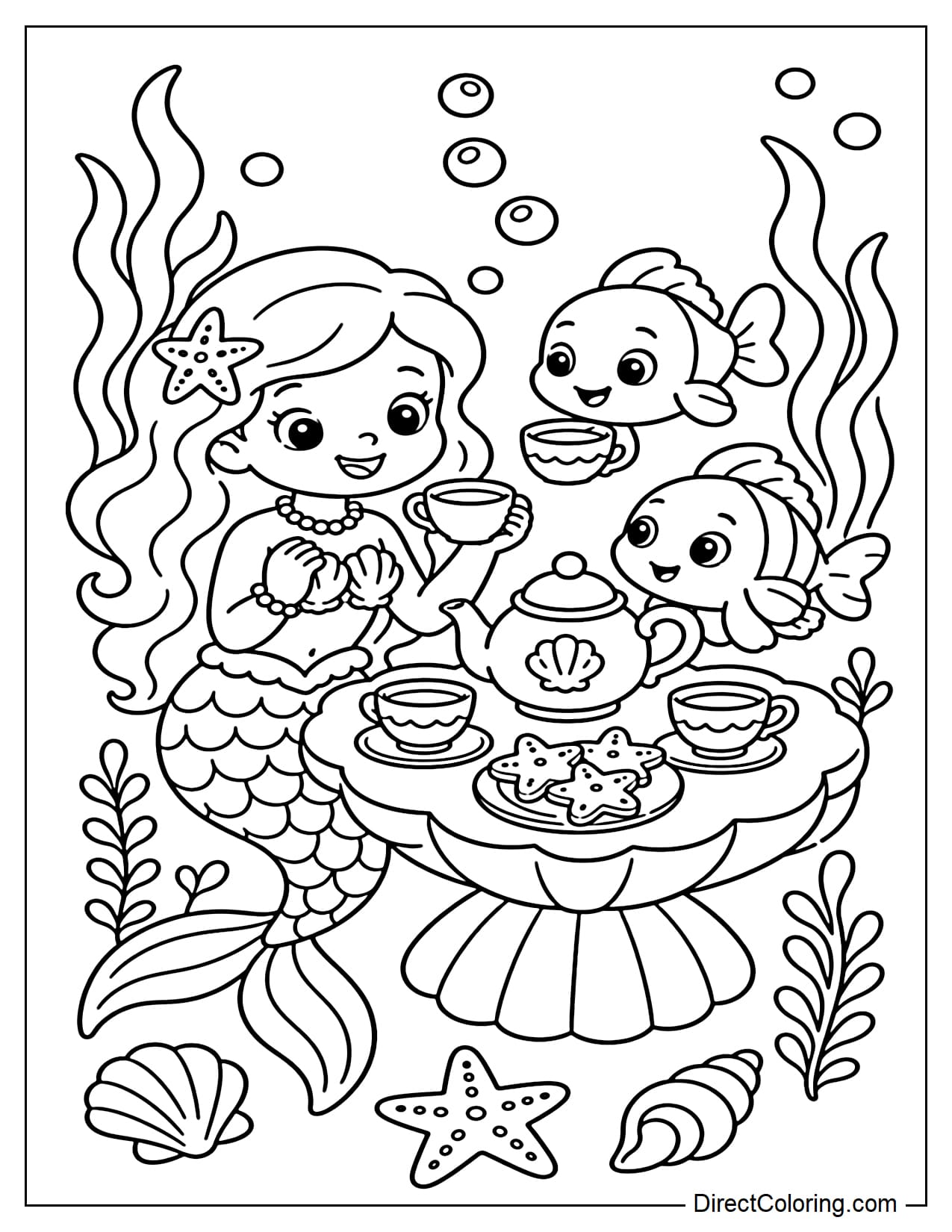
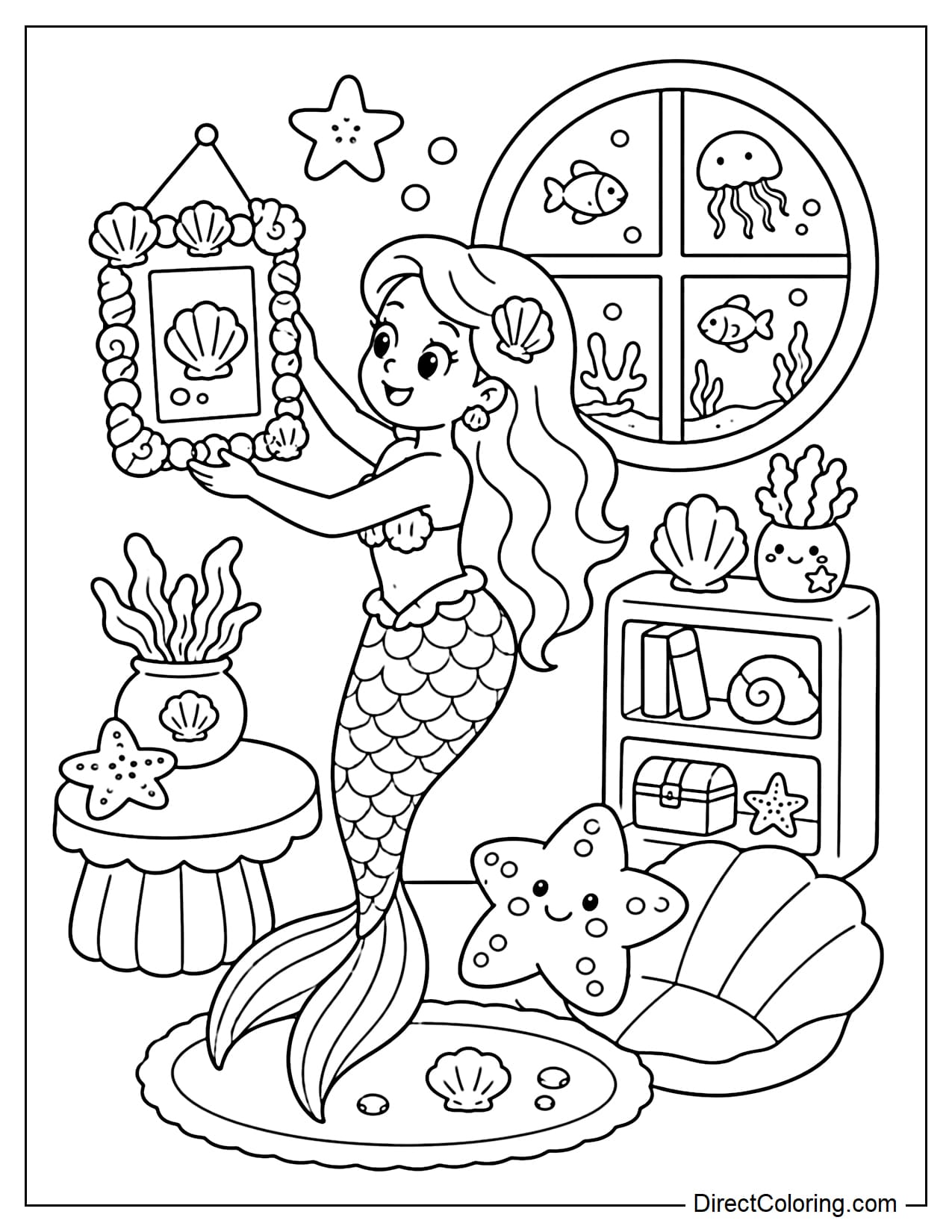
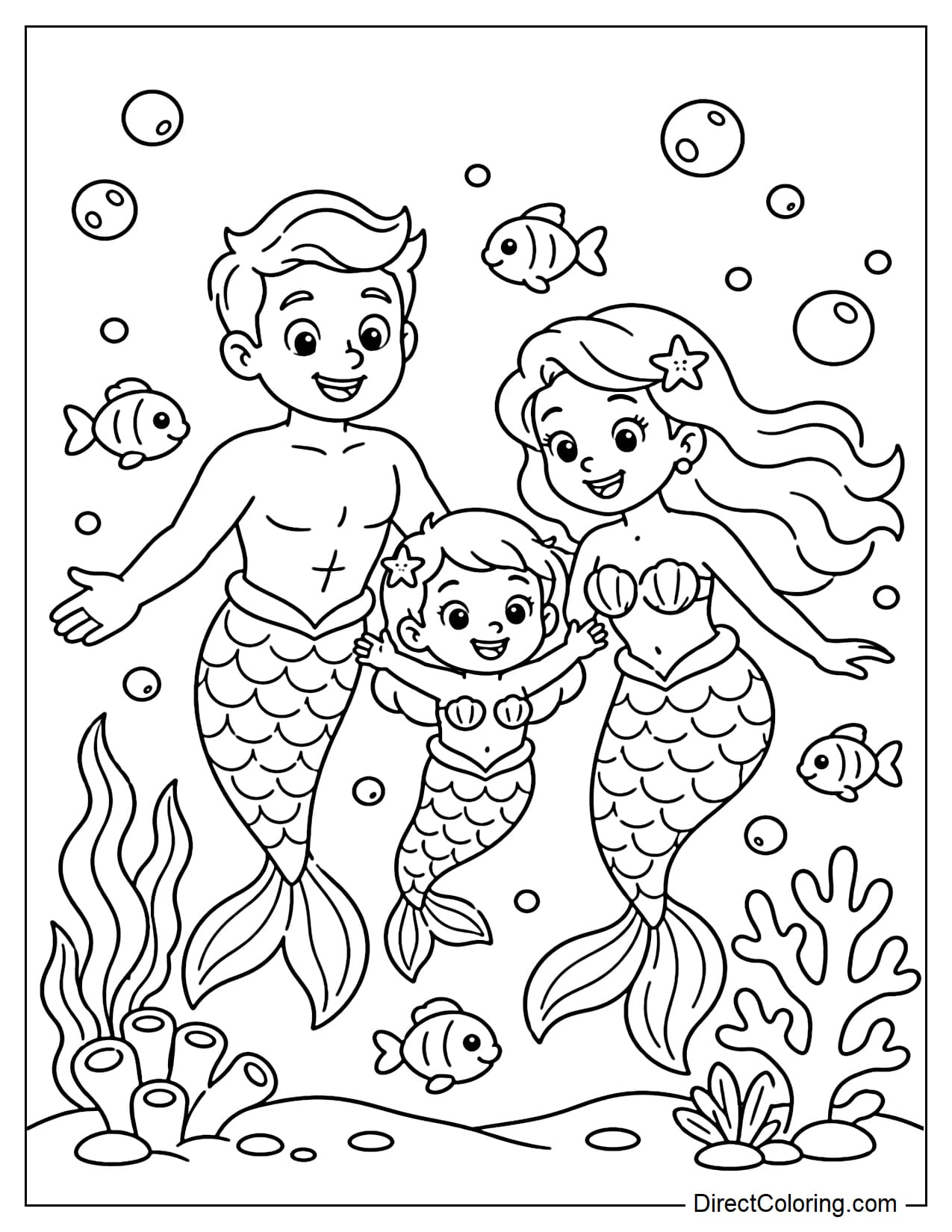
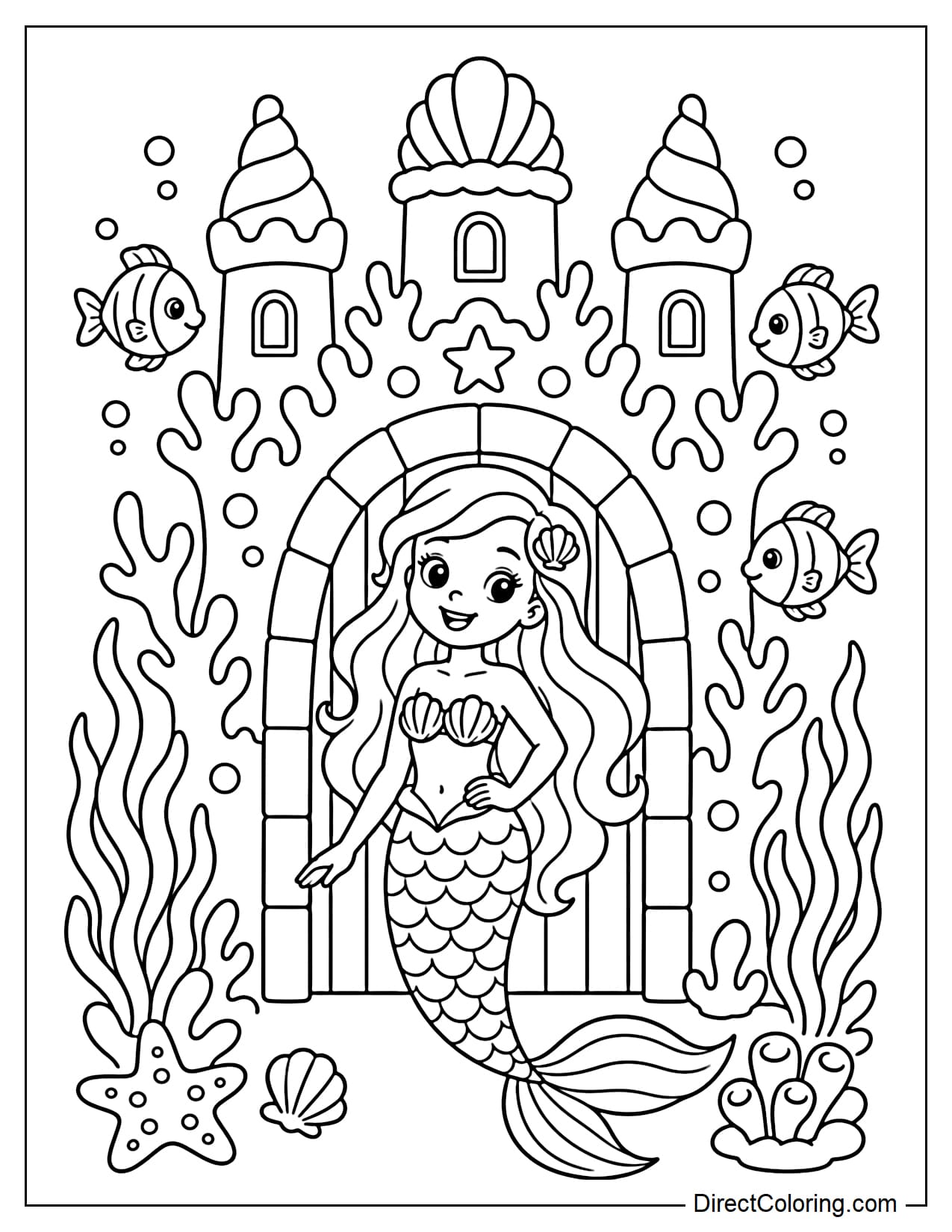
Mermaid coloring pages tend to pull kids in through the tail first, long before the seashells or little fish nearby get much attention. Scales leave room for stripes, blended colors, or several shades worked into the same fin. One page features a baby mermaid hugging a shell nearly her own size, giving younger colorers one broad, clear shape to begin with.
These free printable Mermaid Coloring Pages PDFs feature friendly mermaids, sea animals, treasure scenes, and cozy underwater details. The files are formatted for standard US Letter paper at 8.5 × 11 inches; A4 users can select "Fit to page" before printing. The collection includes open, simple designs for younger children and fuller scenes for older kids who enjoy more objects and background details.
Explore Our Mermaid Coloring Pages Collection
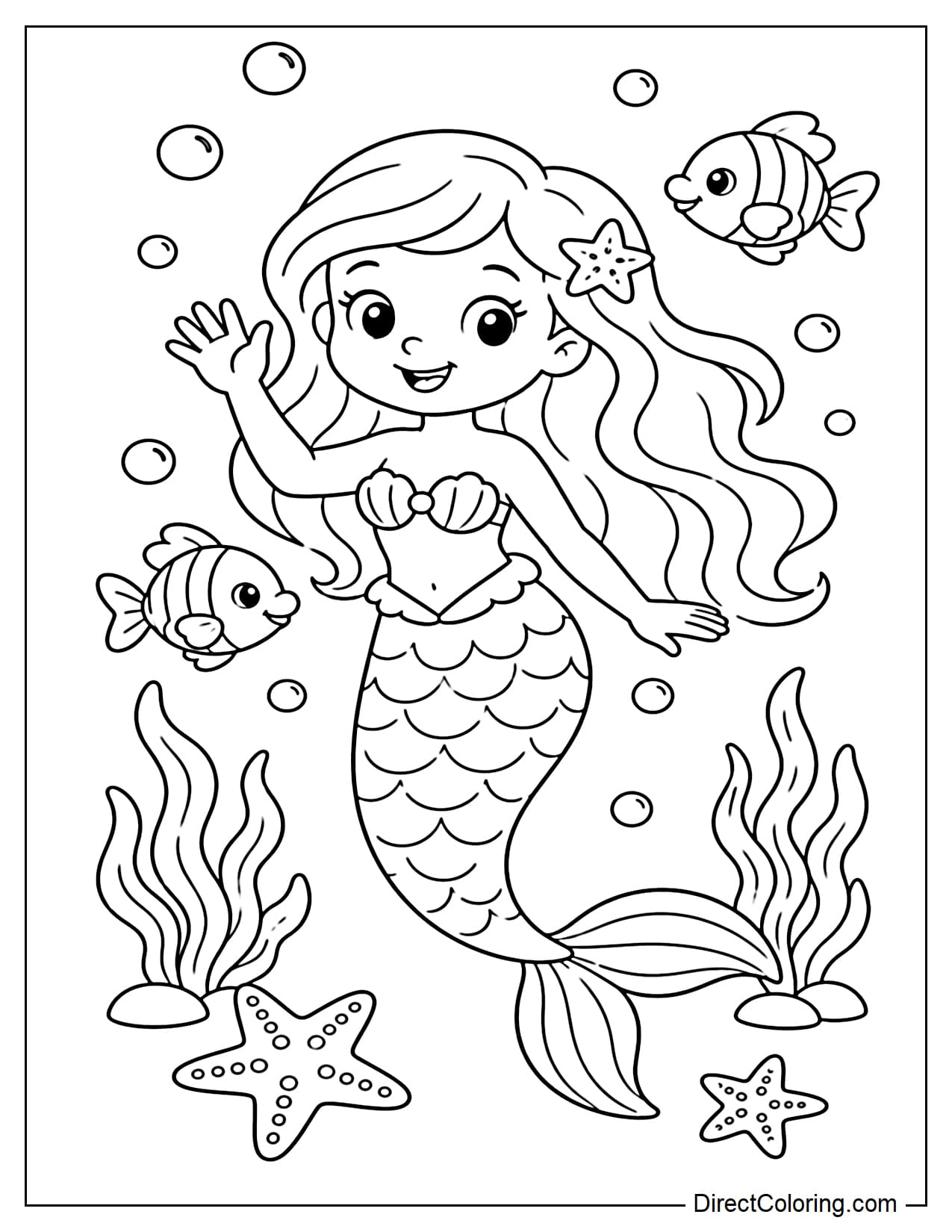
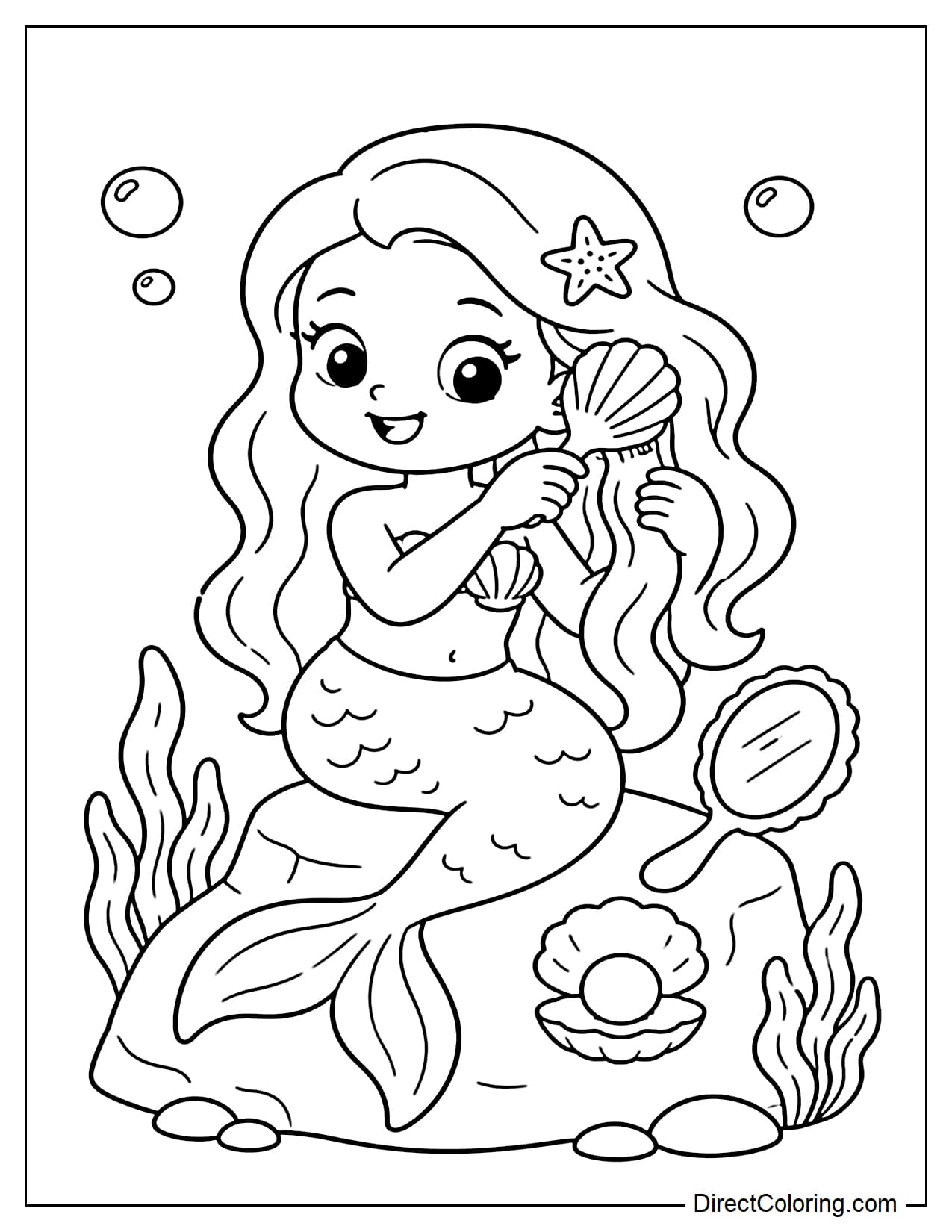
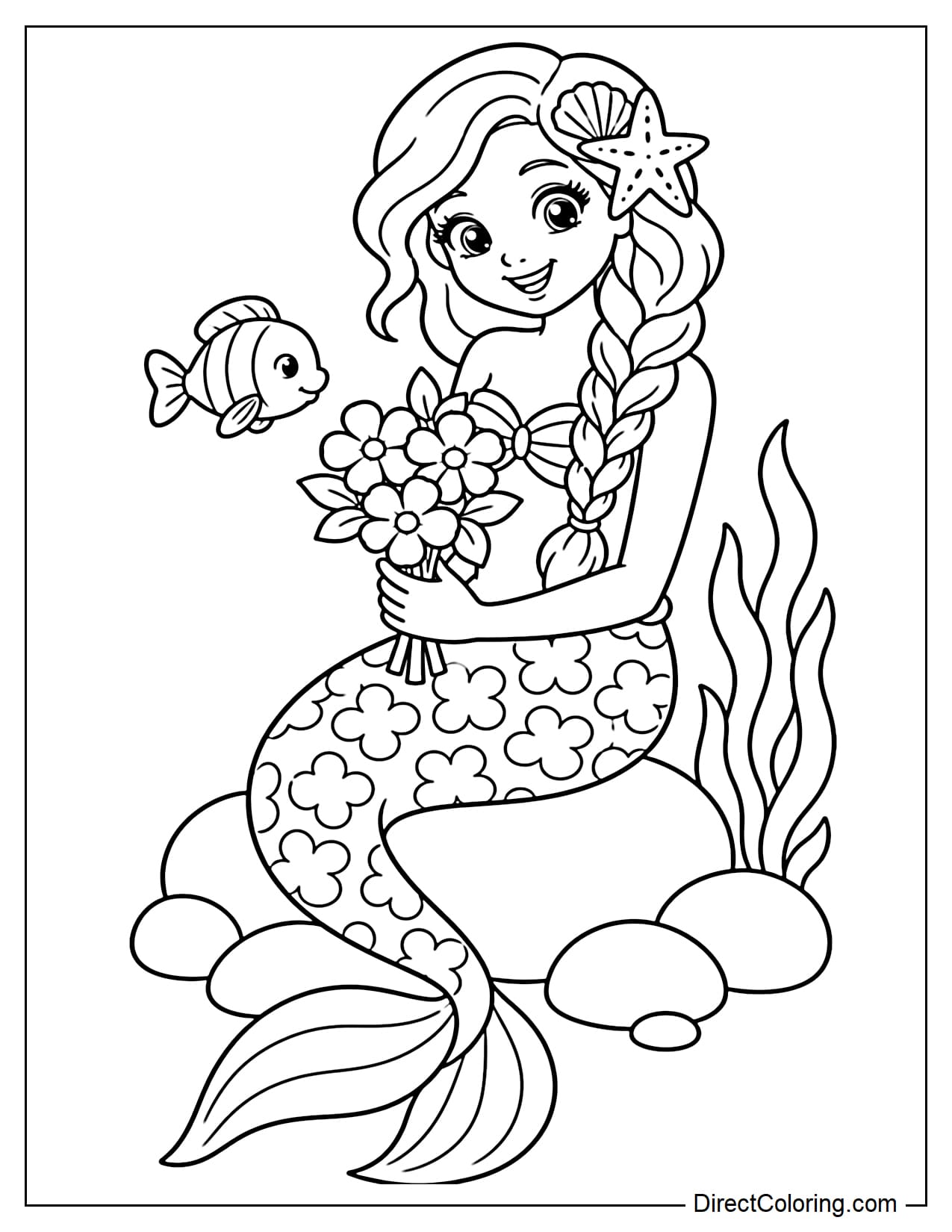
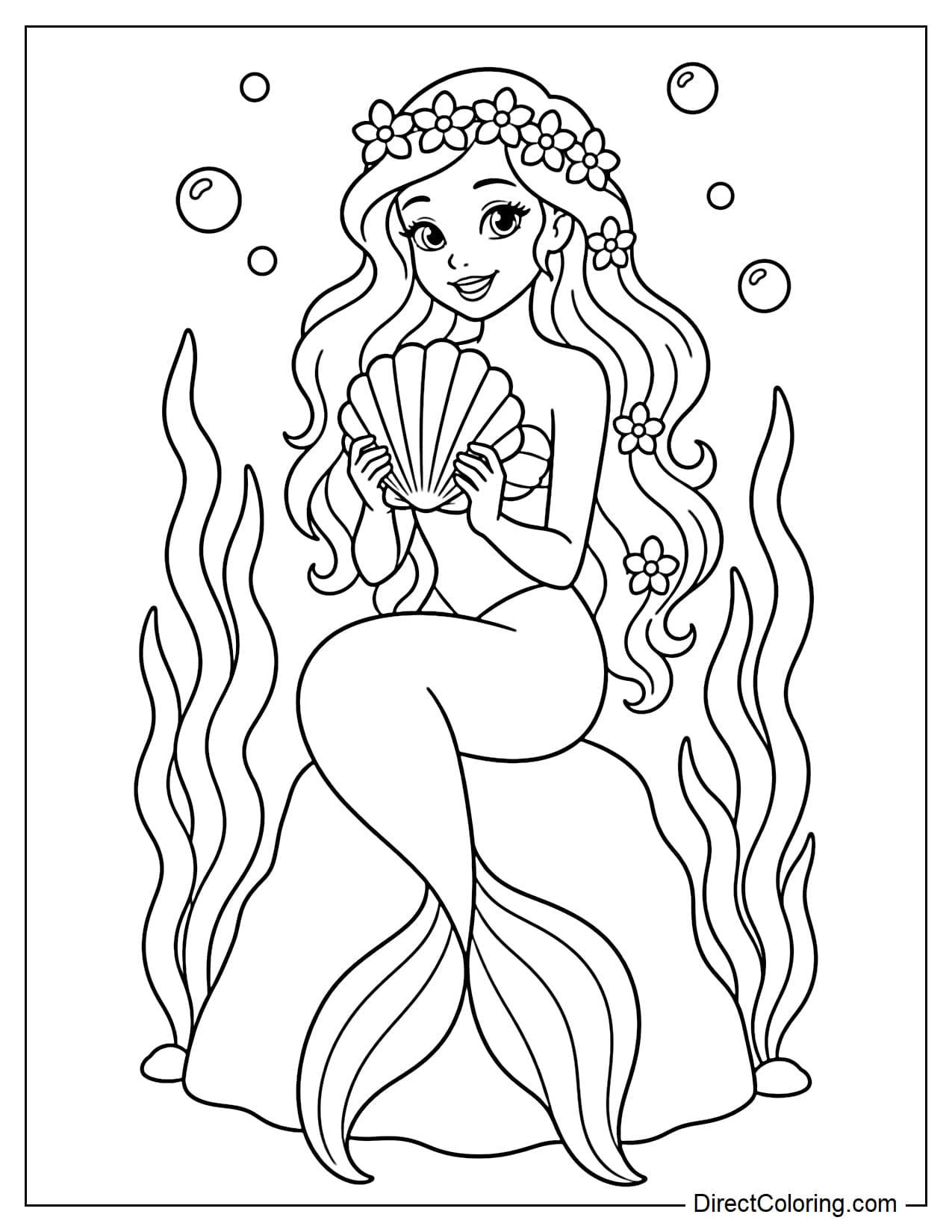
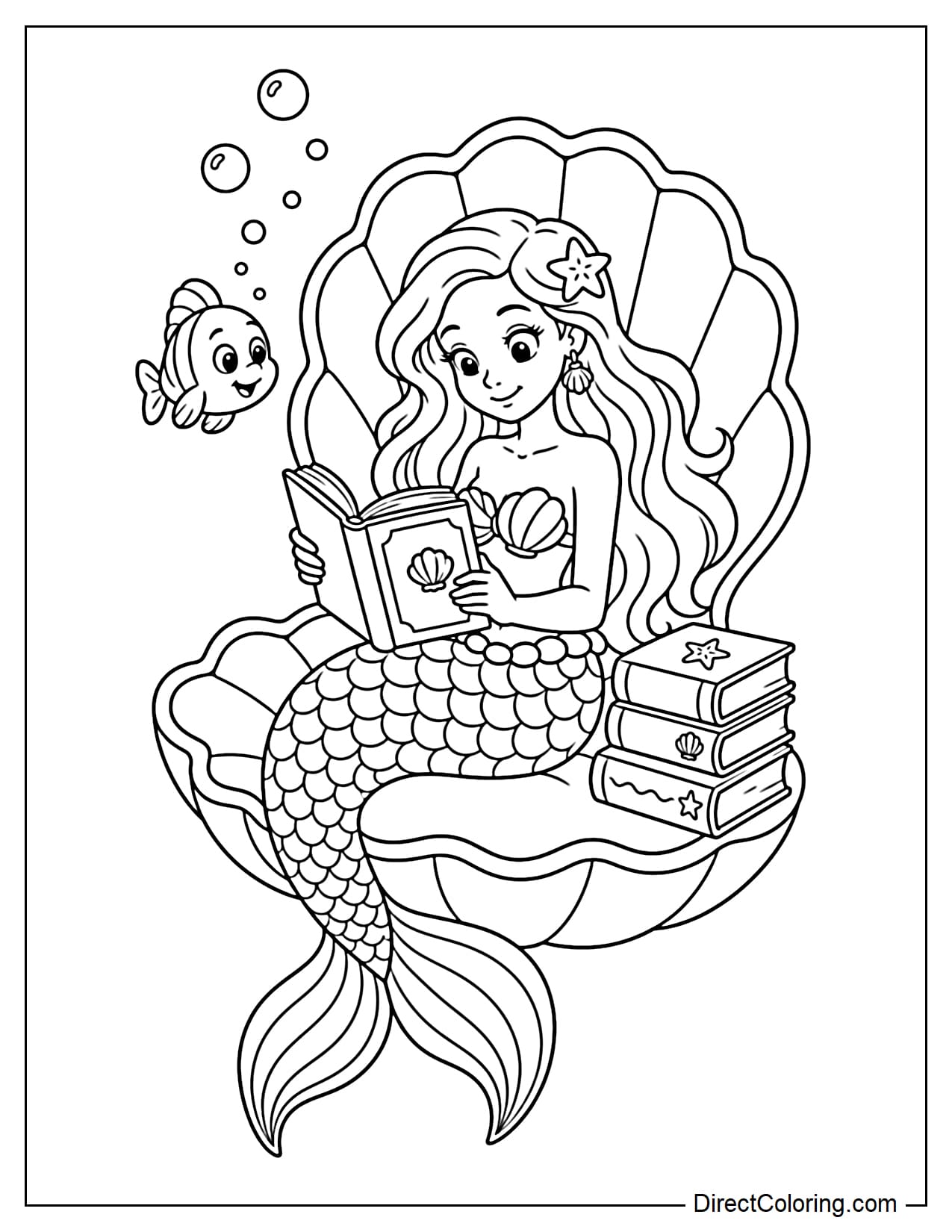
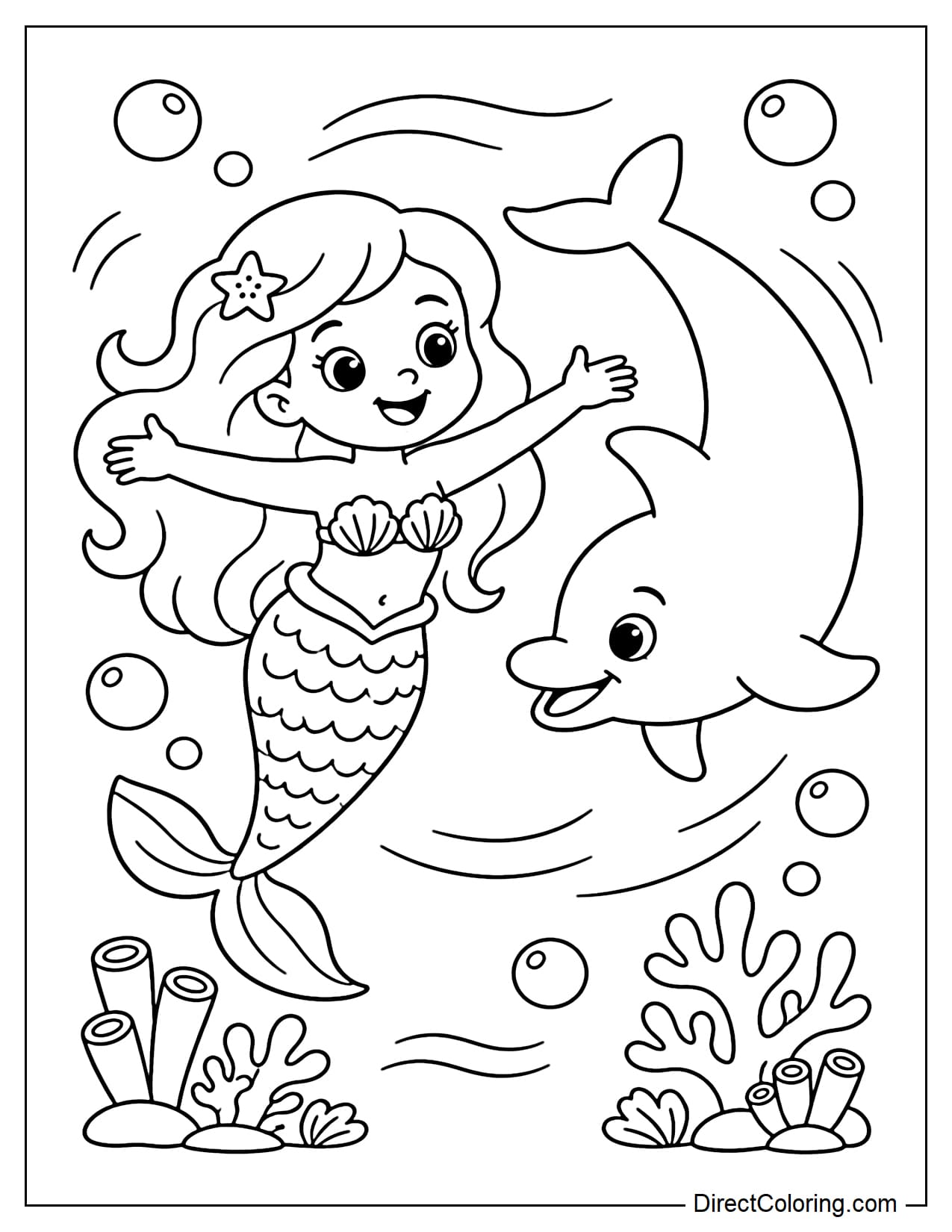
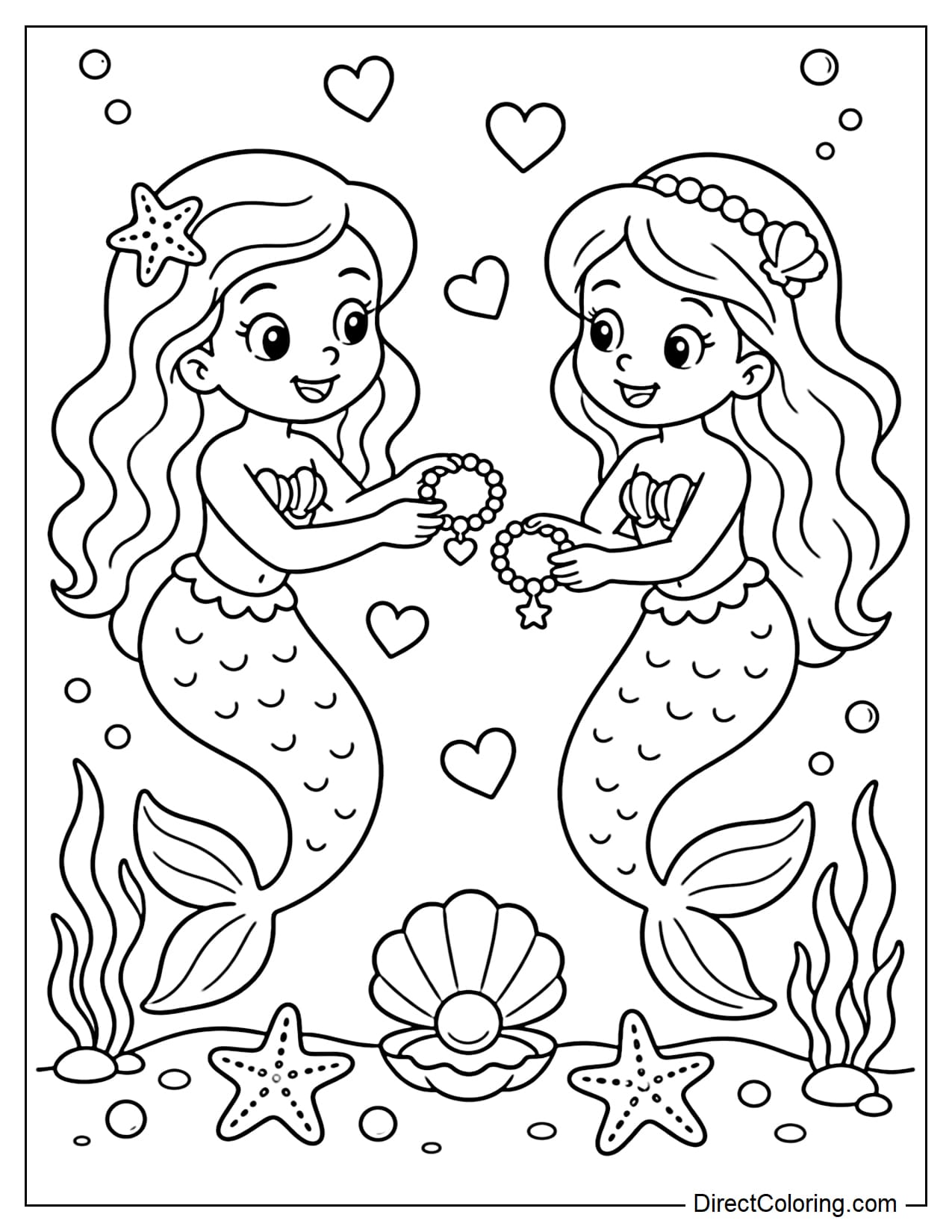
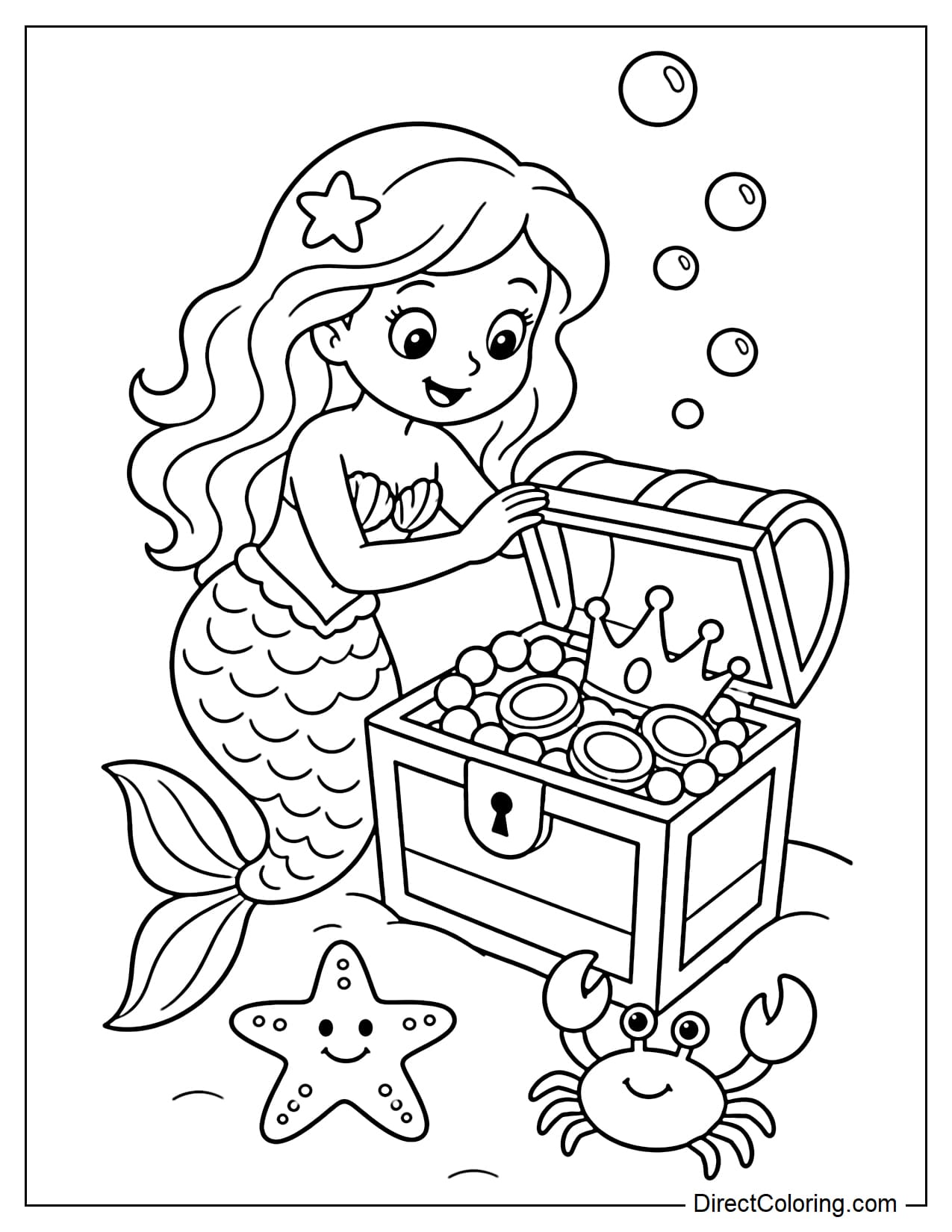
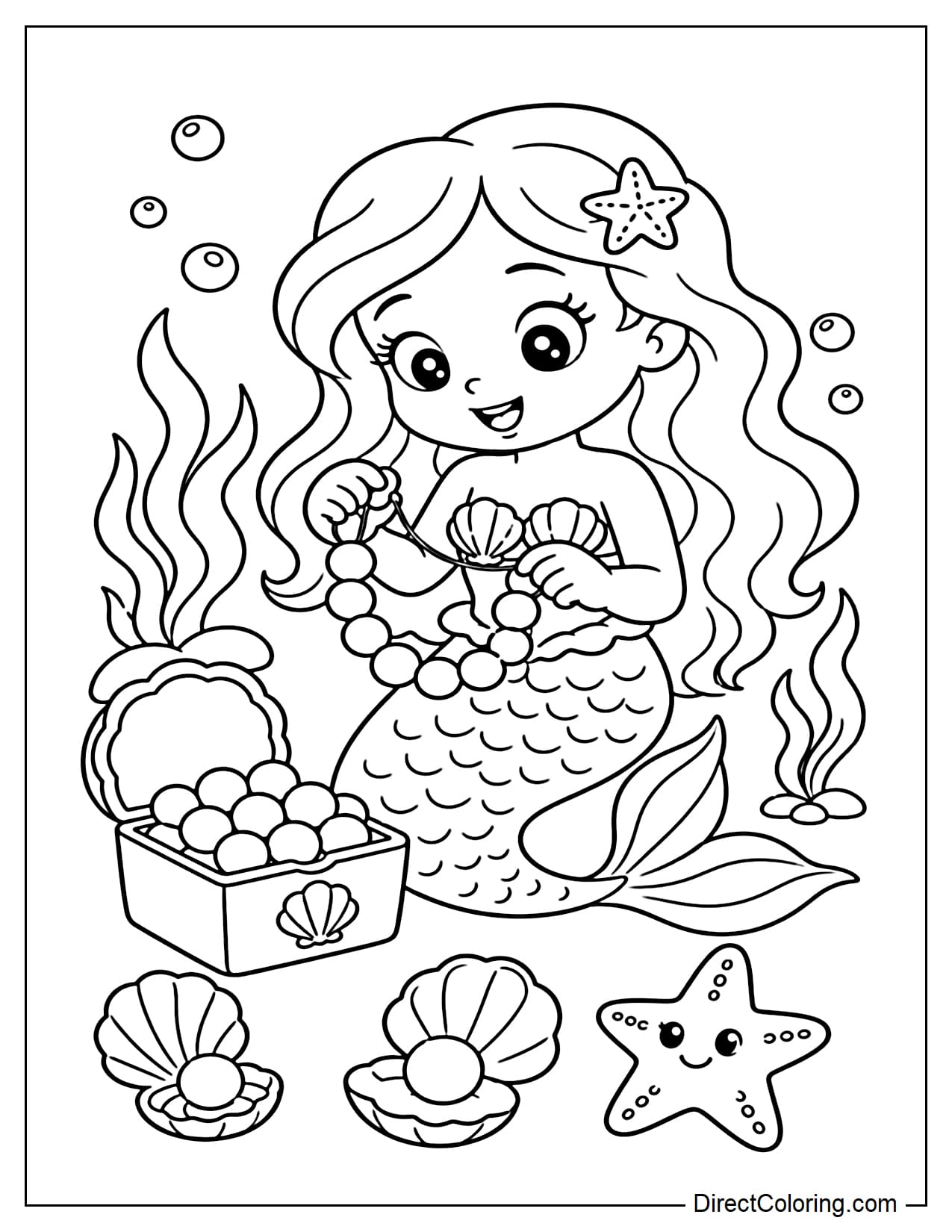
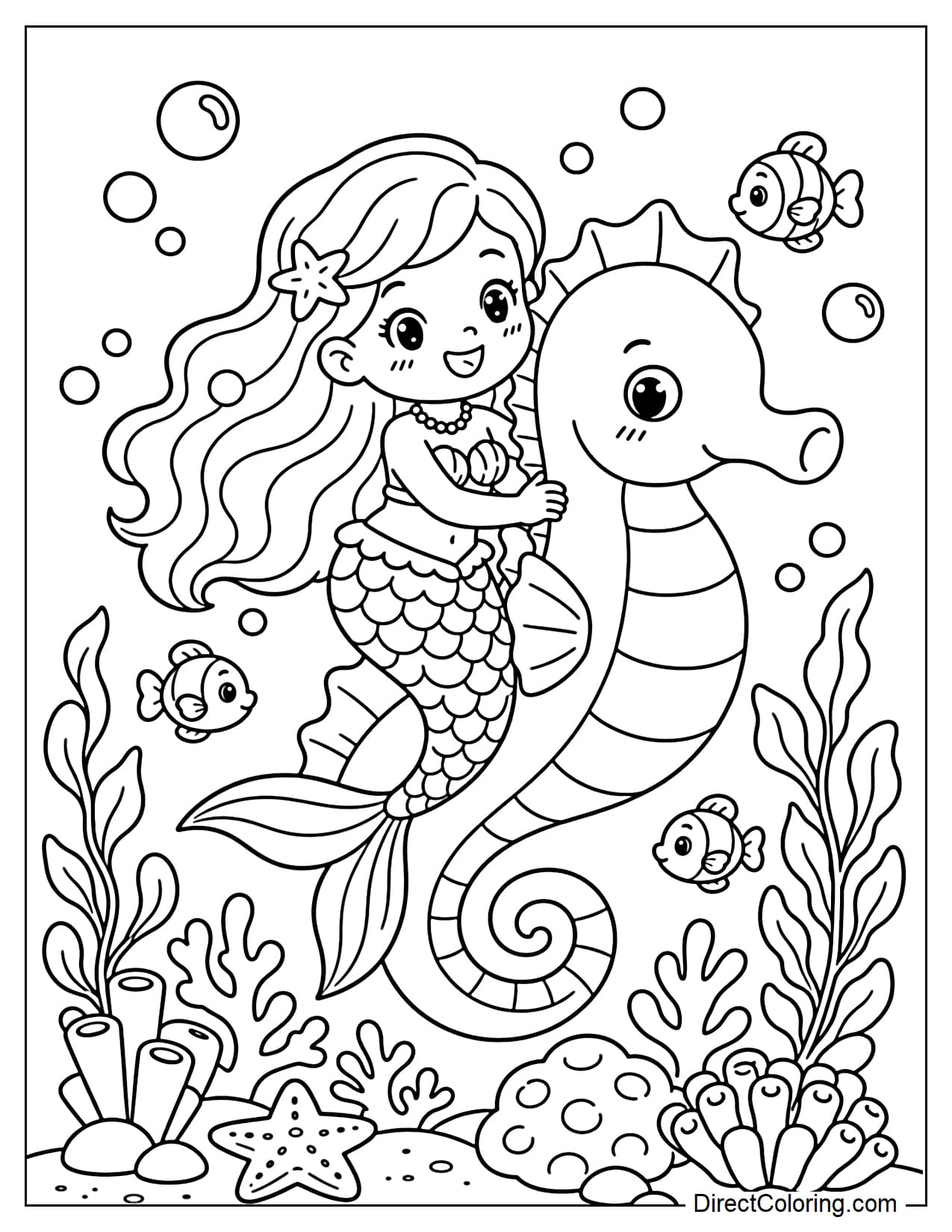
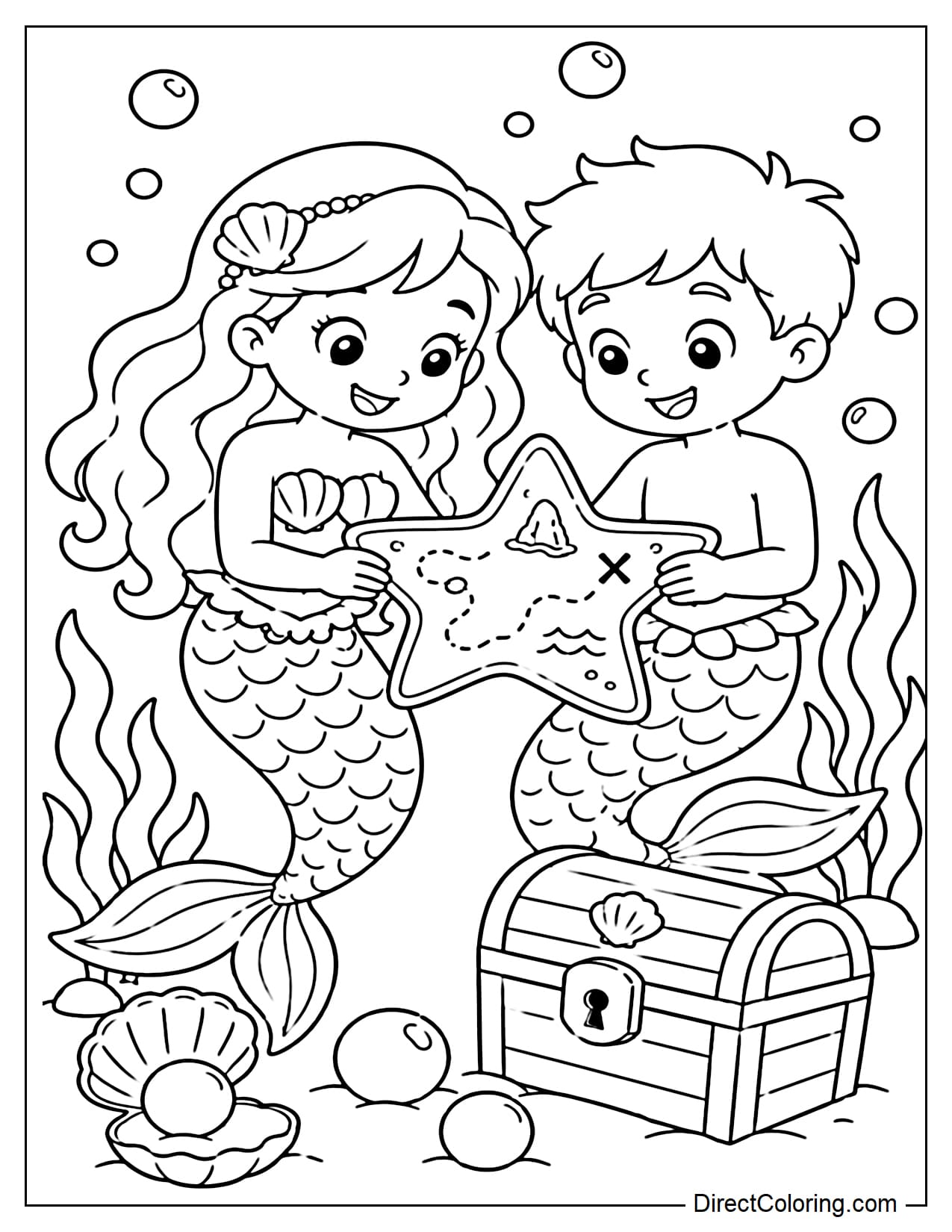
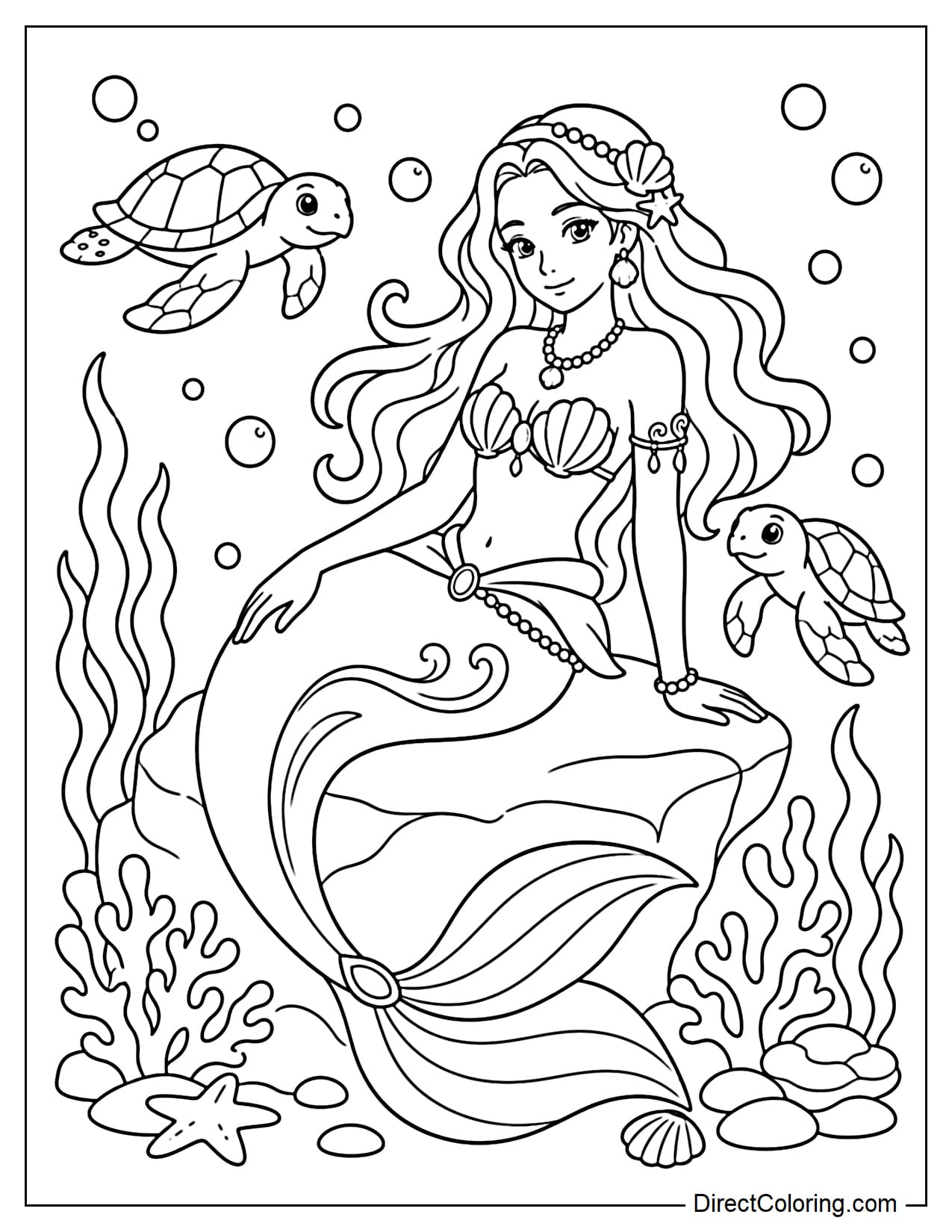
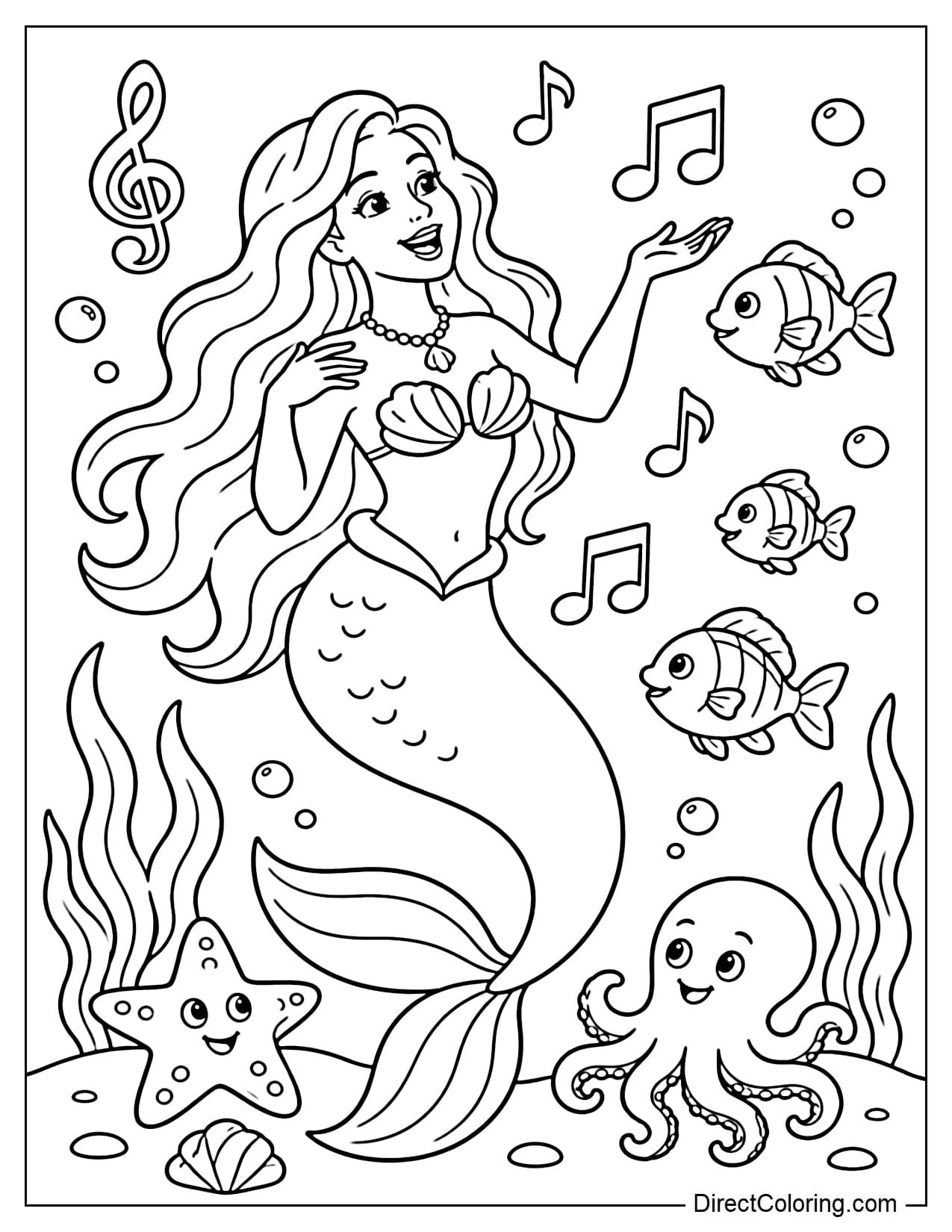
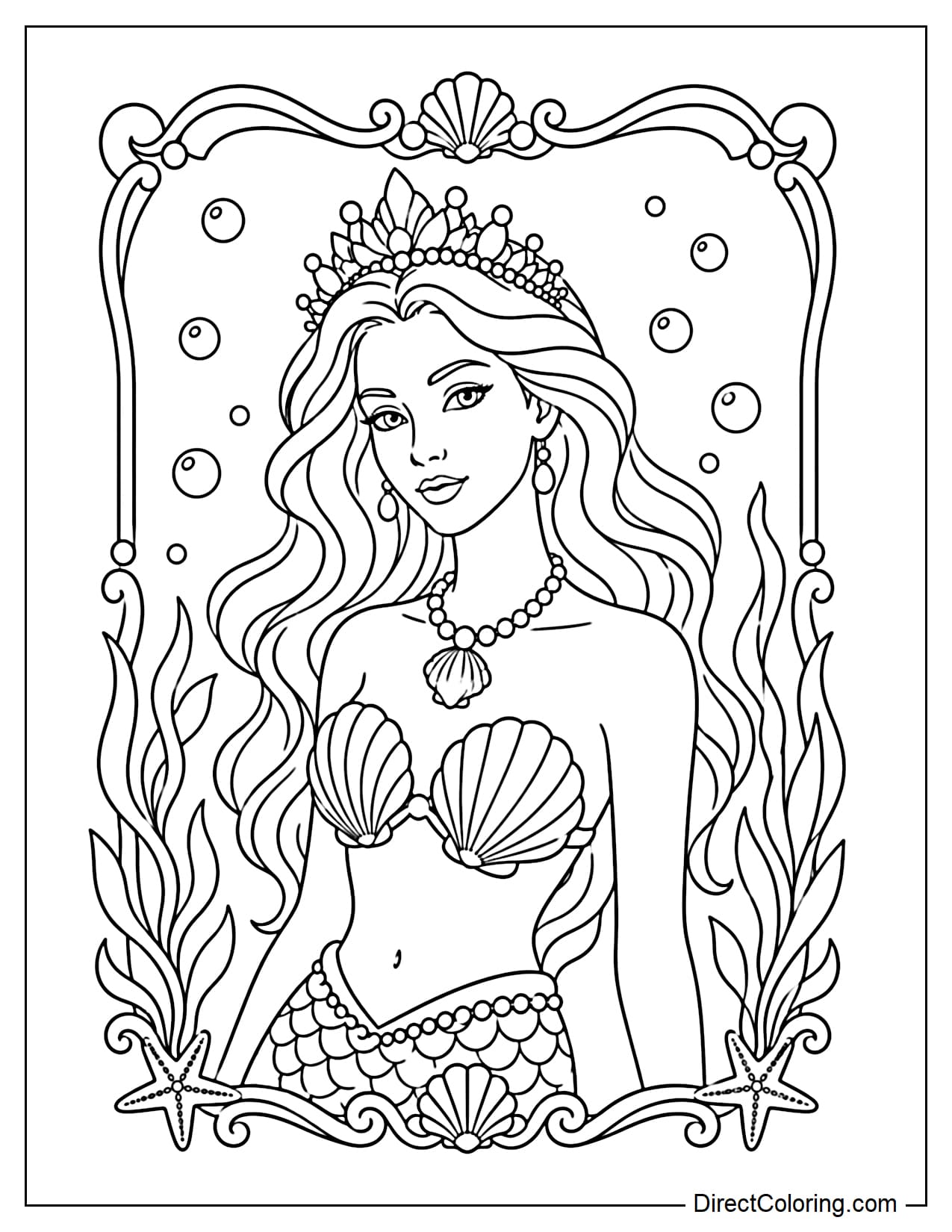
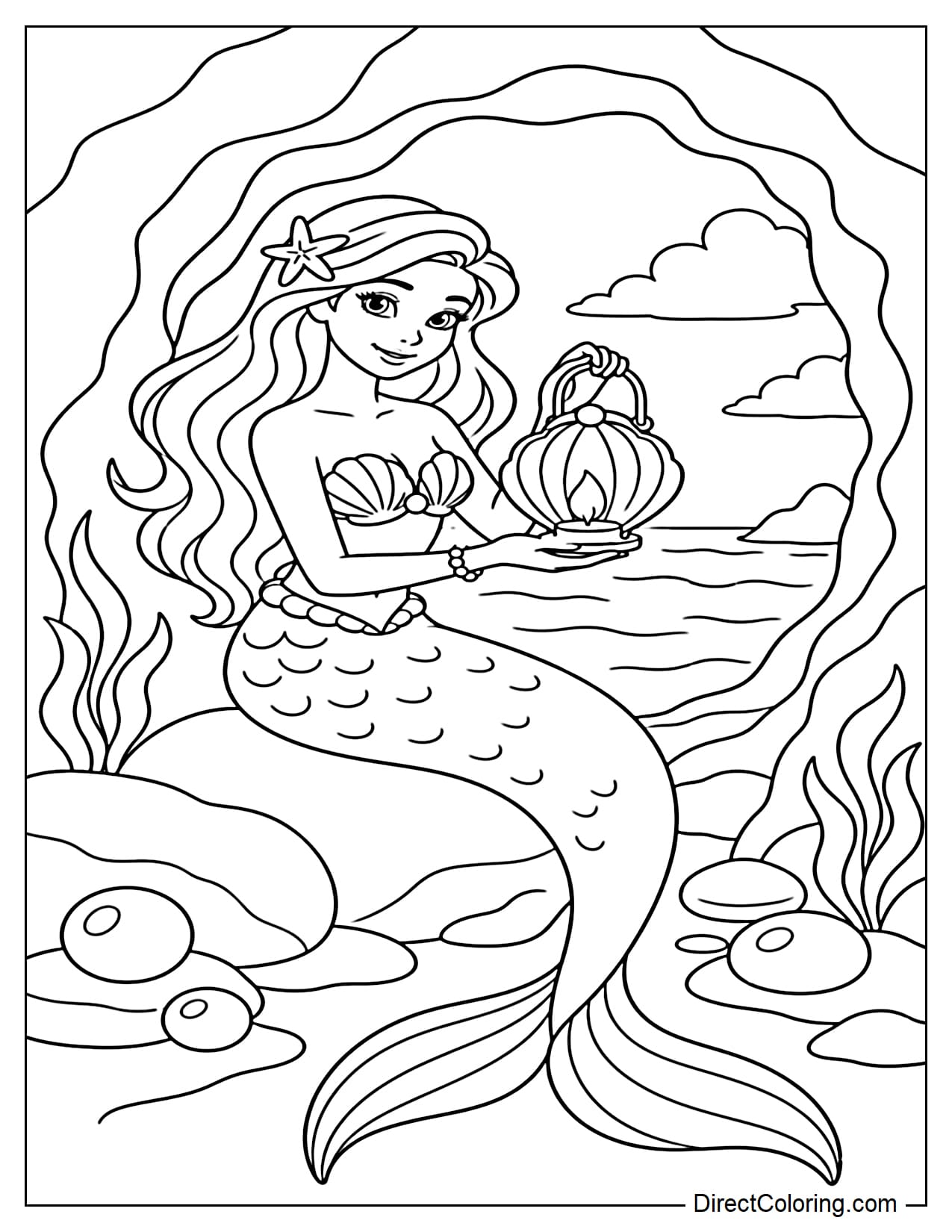
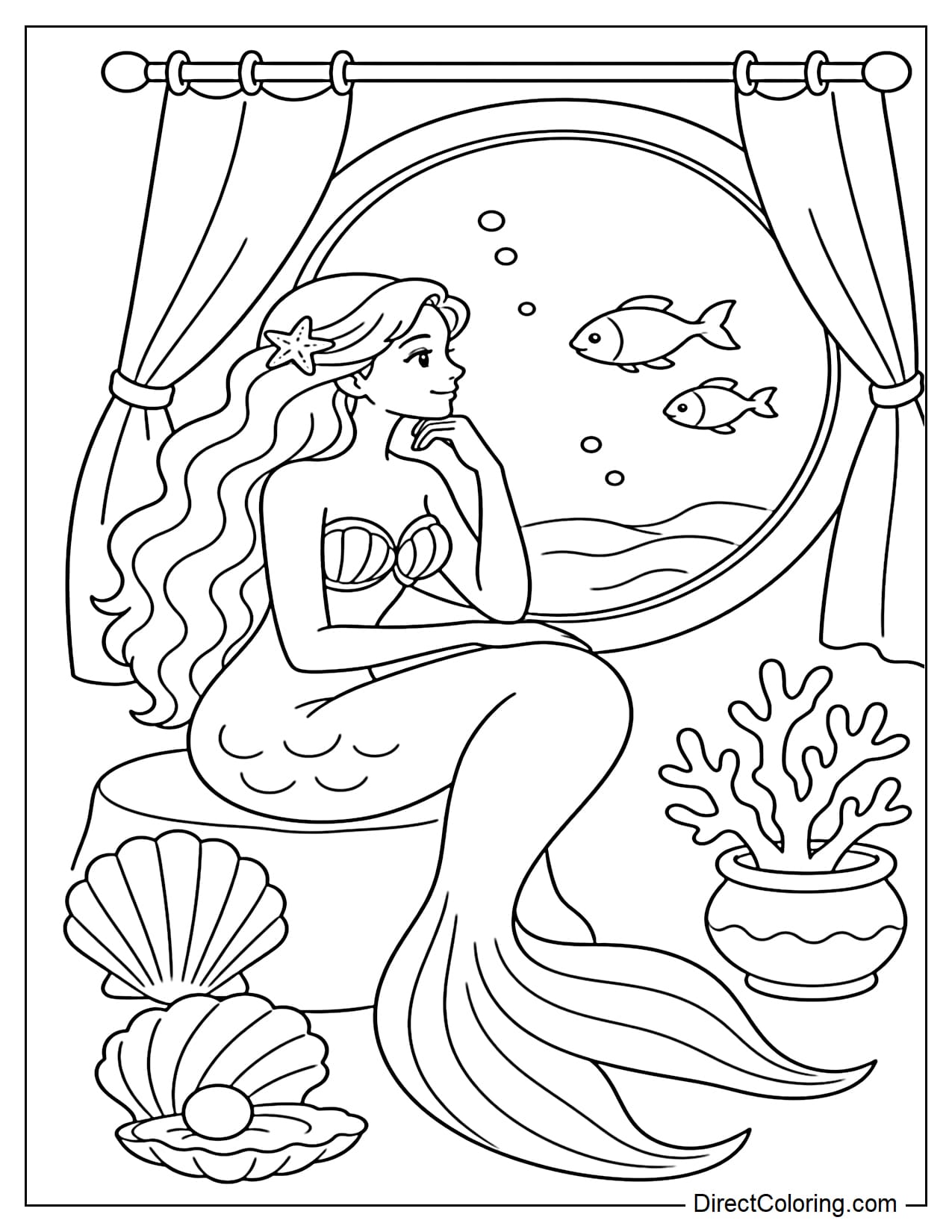
Some pages are quiet and simple: a baby mermaid hugging a large seashell, with a few bubbles and one small fish nearby. Others offer more to work through, including a mermaid and a merman boy studying a starfish-shaped treasure map beside a small chest and several pearls. The collection also includes an underwater reading scene, a mermaid swimming with a dolphin, a mermaid sitting on a rock with a wreath in her hair, and another waving to two little fish.
We drew the tail with a heavier outline than the hair and smaller background details, so it stays visible when children layer two or three crayon colors over the same area. The starfish-shaped map keeps the treasure scene connected to the ocean setting, while bold, continuous lines and clearly separated objects prevent the fuller pages from becoming crowded or difficult to color.
Discover more printable coloring pages you'll love
Fun Ways to Use These Mermaid Coloring Sheets
Mermaids give children plenty of small choices to make, from the color of the tail to the shades used for hair, coral, shells, and sea animals. Some children may alternate colors across the scales, while others fill the whole tail with one favorite crayon and stop there. At home, the simpler pages can fill a quiet afternoon or a few minutes before bath time. In a classroom, they can work as low-preparation transition or early-finisher activities. The fuller scenes can also become simple storytelling prompts: children might name the mermaid, decide what is inside the treasure chest, or explain where the dolphin is taking her.
Print These Mermaid Pages and Share What You Color
Choose a page, download the PDF, and grab whatever crayons are closest. Let the tail colors go wherever they want; matching is optional. Once it is finished, snap a photo and share it on Facebook, Instagram, Pinterest, or X with the hashtags #MermaidColoringPages, #DirectColoring. Bonus points if the mermaid ends up with hair that no ocean has ever actually seen.
Frequently Asked Questions
1. My daughter keeps asking about the treasure map page. Is it actually shaped like a starfish?
Yes, the map in that scene is starfish-shaped rather than the usual rolled scroll. It sits alongside a small treasure chest, several large pearls, and some seaweed. It is one of the fuller scenes in the collection because it includes more separate objects and narrower coloring areas than the baby mermaid or dolphin pages.
2. Does the baby mermaid page feel too simple for a 6-year-old, or is there enough on it to be satisfying?
It depends on the child. The baby mermaid page has a large seashell, some coral, bubbles, and a small fish, simple shapes, but a 6-year-old who likes to color neatly and take their time with shading can still find something to work with there. Kids who want more to fill in prefer the treasure map or the reading scene.
3. My daughter is 3. Can she actually use these, or will she scribble over everything?
The baby mermaid and the mermaid waving to two fish are the most manageable for a 3-year-old, with large open shapes, bold outlines, and nothing crowded. She may color outside the lines and may leave the bubbles or background untouched, and that's completely fine. These pages aren't designed to require precision at that age. The fuller scenes may work better once she begins asking for more objects to color.
4. My 9-year-old thinks coloring pages are too easy. Are any of these actually worth her time?
The treasure map scene and the underwater reading page both have enough separate elements, characters, accessories, sea animals, and background objects that an older child can build a real color scheme rather than just filling in a single shape. They're not complex in a mandala sense, but there's enough going on that a 9-year-old who cares about the result will naturally slow down and think it through. The dolphin page may feel too simple if she prefers busy backgrounds, while the treasure map and reading scenes offer more room to plan a full color scheme.
5. My kid always colors the tail and then puts the crayon down. Is that still doing anything useful?
Choosing a color for the tail is genuinely one of the more involved decisions on these pages; it sets the palette for everything else, and the tail can easily become the main event on the page. Some come back to the rest of the page later, sometimes in the same sitting, sometimes the next day. Finishing one section carefully and stopping is not the same as losing interest. There's no required order here.
6. We print these pages often. Does the design hold up when printed in draft mode?
Yes, the bold continuous outlines are part of why we draw them that way. The bold continuous outlines are designed to remain visible in draft or economy mode, although results can vary by printer and ink level. Grayscale is usually sufficient because the pages use black line art.